From water infrastructure to water services
SafePani uses government co-funding, professional maintenance and independently verified performance to help schools and healthcare facilities in Bangladesh to access safe, reliable drinking water.

What is results-based funding?
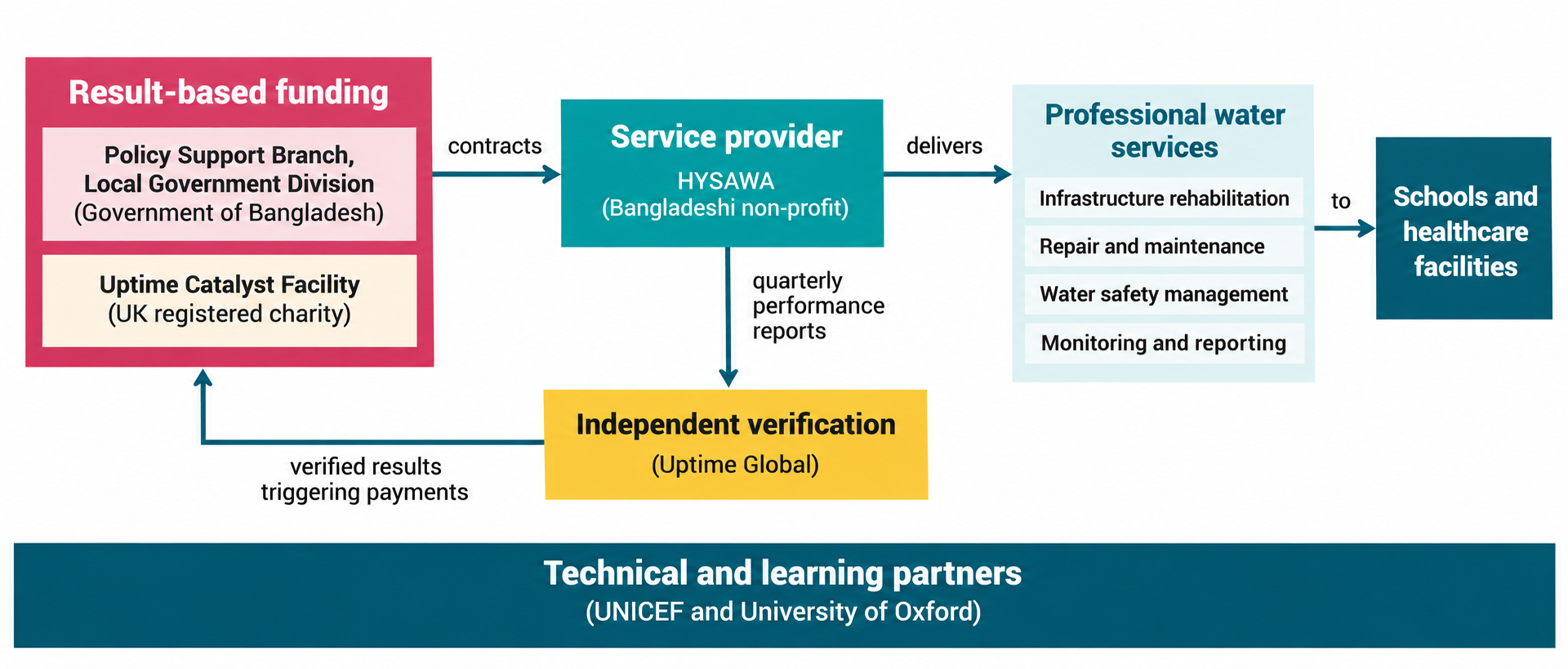
Results-based funding links payments to independently verified water services, rather than only financing the construction of pumps, tanks and pipes.
Why is it needed?
Rural waterpoints may break down or provide unsafe water because routine maintenance, repairs and water testing are not adequately financed. Installing infrastructure is only the beginning.
What changes?
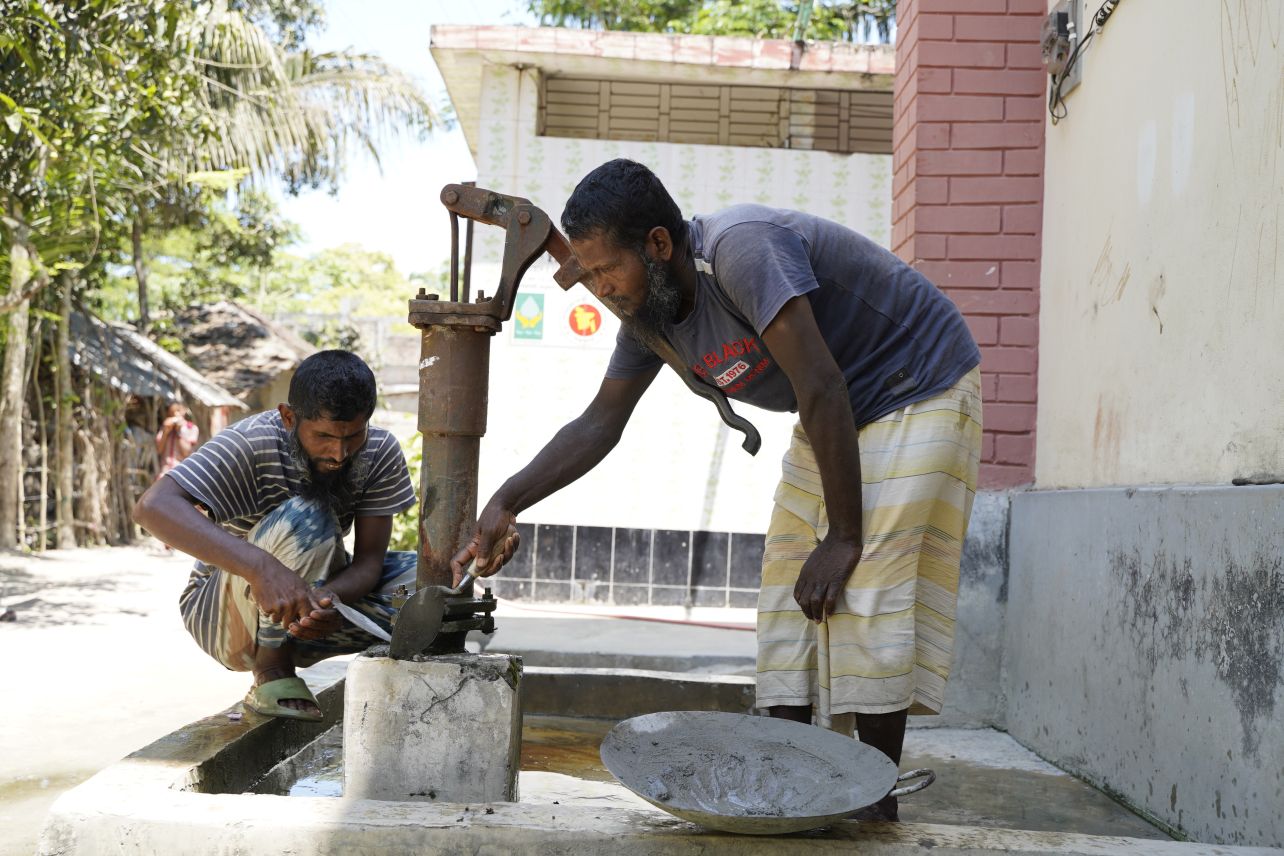
Professional providers take responsibility for keeping infrastructure working, monitoring water safety and responding when problems occur, with clear service standards and predictable financing.
How is performance rewarded?
Governments and funding partners agree indicators, verify reported results and release payments linked to the quality and reliability of services delivered.

What does the model deliver?
'SafePani' is a professional water service delivery model for schools and healthcare facilities in rural Bangladesh. It aims to address gaps in safety and reliability of drinking water services to advance progress towards the Sustainable Development Goal (SDG) Target 6.1.

Results and costs
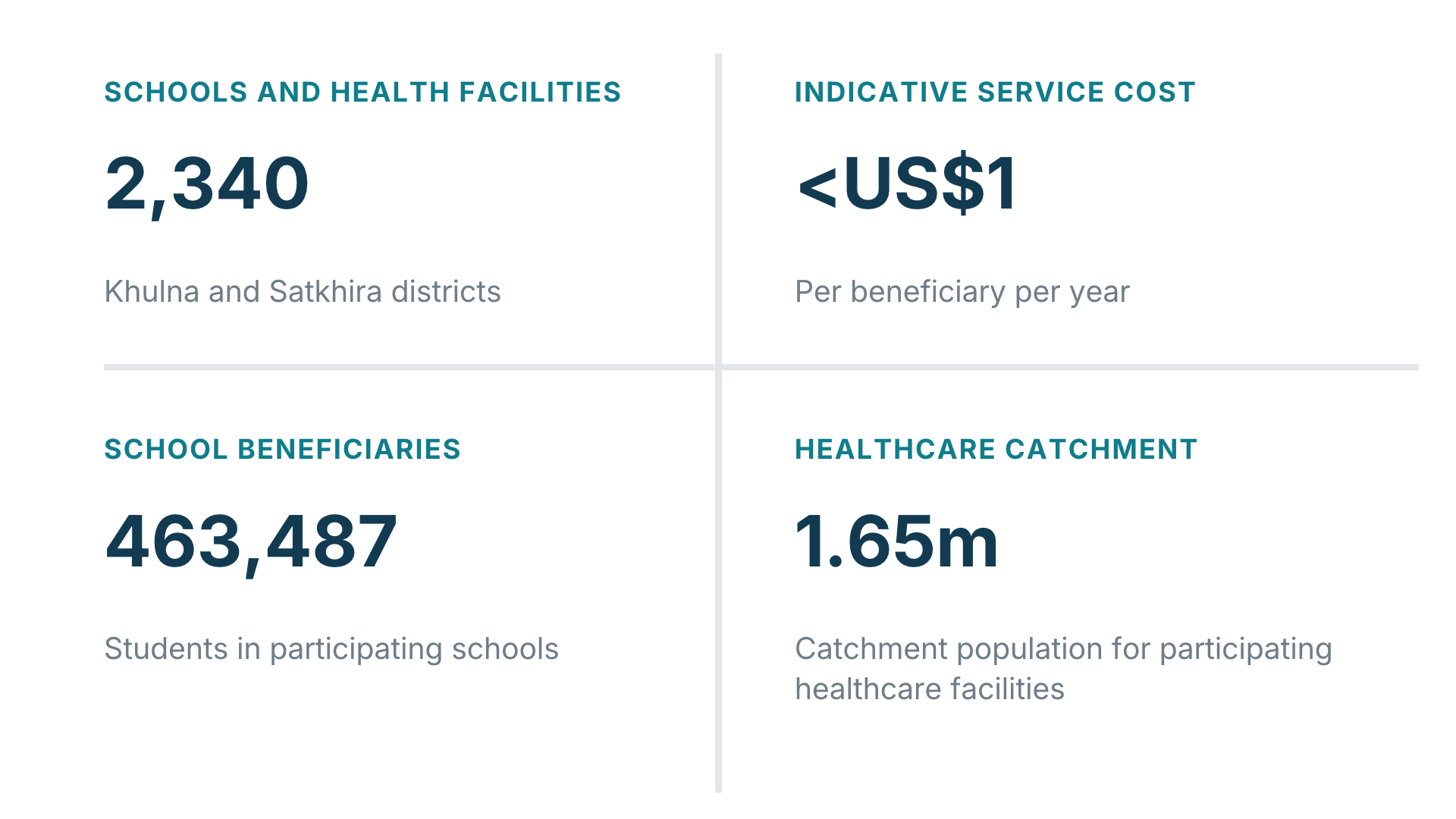
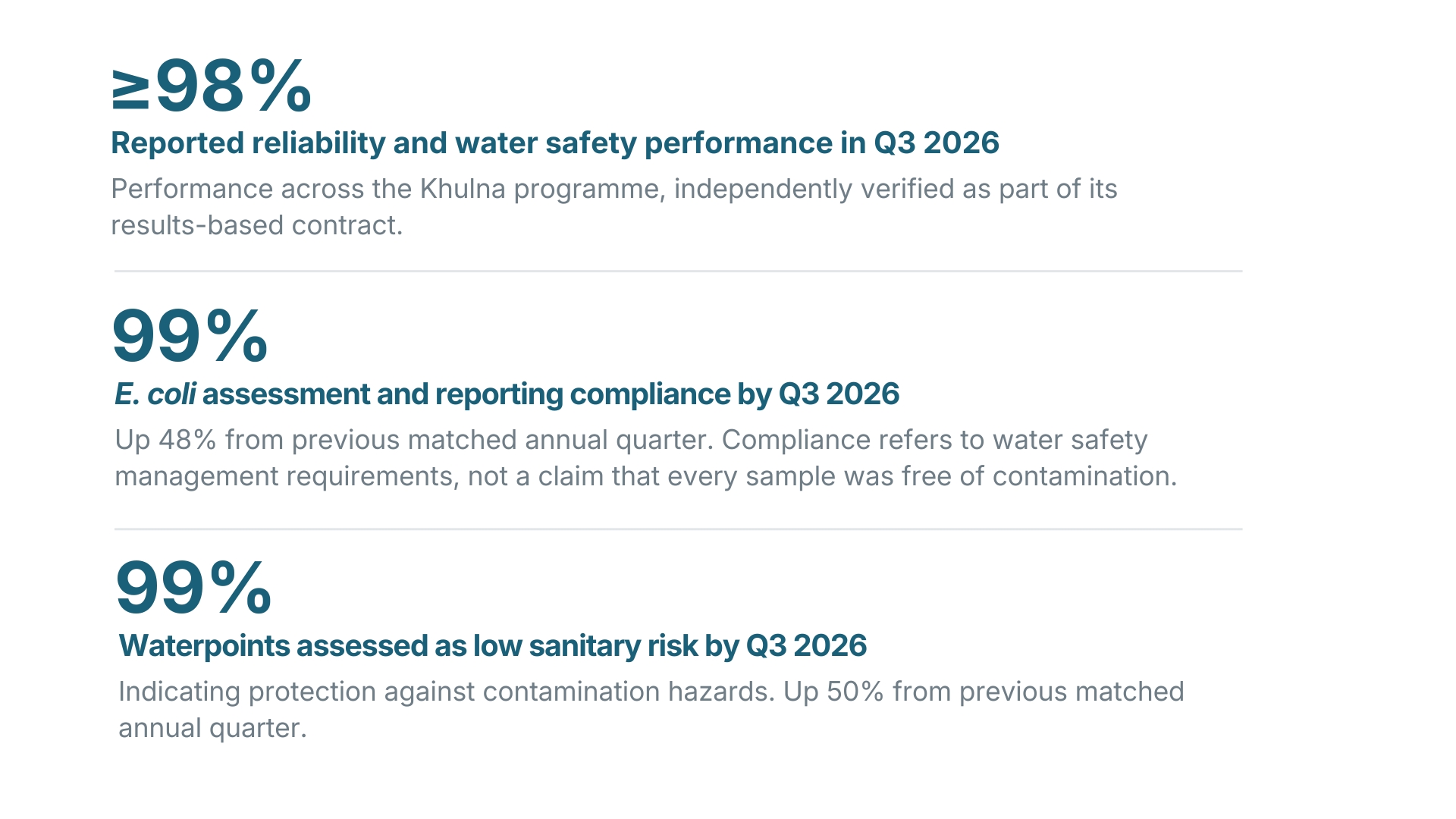
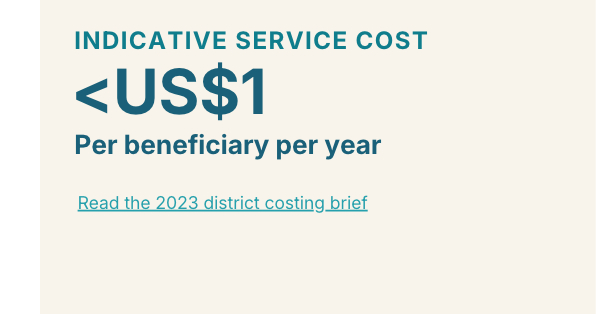
Early results show that professional service delivery can improve operational reliability and water safety management, alongside a route into multi-year public financing.

The SafePani journey
- 2016-2021: Building the evidence
REACH research demonstrates that drinking water in schools and clinics is often unsafe or unreliable, establishing the case for a new service model.
Hope et al. (2021): Policy reform for safe drinking water service delivery in Bangladesh - identifies gaps in water safety, reliability and financing, and proposes institutional and financial reforms for professional services.
Hoque et al. (2021): Drinking water services in coastal Bangladesh - examines salinity, climate risks and inadequate maintenance as barriers to safe water services in coastal areas.
Fischer et al. (2021): Policy reform to deliver safely managed drinking water services for schools in rural Bangladesh - documents water contamination and infrastructure failures in rural schools, supporting the case for professional maintenance.
- 2021–2023: Piloting the SafePani model
HYSAWA was contracted as the service provider to pilot SafePani in eight unions of Khulna District, covering 204 institutions. A National Steering Committee, chaired by the Secretary of the Local Government Division, and a District Working Group, chaired by the Deputy Commissioner of Khulna, were established.
REACH (2023): Cost estimates for safe drinking water in schools and healthcare centres in Khulna District - estimates the costs of district-scale professional water services and the feasibility of recurrent financing.
Charles et al. · Oxford and Uptime Global (2023): Results-based funding for safe drinking water services - proposes a standard contract framework linking water safety assessment, reporting and corrective management to incentive payments.
- 2024–2025: From pilot to results-based public finance
Bangladesh’s Planning Commission approved six-year national budget commitments to co-fund a results-based contract with the Uptime Catalyst Facility in Khulna District. Works begin in January 2025, covering 1,100 schools and 74 healthcare facilities.
REACH (2025): SafePani: Public finance to support safe drinking water in Bangladesh - explains the shift from pilot delivery to the government co-funded results-based contract in Khulna.
Hoque et al. · Environmental Science & Policy (2026): Driving impacts through science-practitioner partnership - analyses how research partnerships, government engagement and institutional champions supported policy uptake and scale-up.
Nowicki et al. · Environmental Science - Water Research and Technology (2025): Enabling data for decision making on drinking water safety through fit-for-purpose laboratories - demonstrates how fit-for-purpose laboratories operated to support water service providers can deliver data for operational and strategic water management decision-making
- 2026: Expansion to Satkhira District
Results-based contract with government co-funding expanded into Satkhira in Q4 2026, covering 1,080 schools and 86 healthcare facilities.
Events and engagement
UN Water Conference 2026 In Person Side Event: Results-based funding for safe drinking water services (Thursday 10th December) - Find out more
UN Water Conference 2026 Virtual Side Event: Making Results-Based Finance Work for Water Service Providers (Monday 7th December) - Find out more
What next?
The Directorate of Primary Education’s Fifth Primary Education Development Programme (PEDP5) is considering the SafePani model to potentially serve all public primary schools in 16 of 64 districts across Bangladesh.
SafePani - Bangladesh